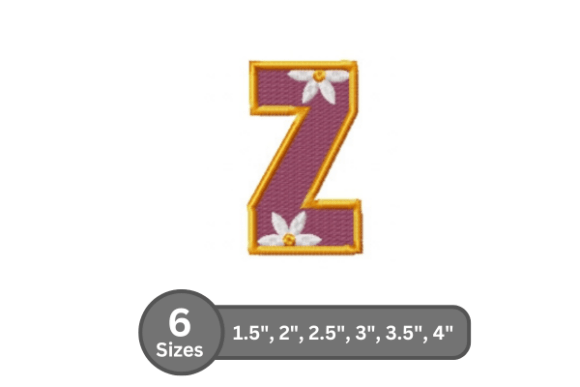
Daisy Joy Alphabet- Z: A Practical Evaluation for Embroidery Professionals
In the realm of machine embroidery, the letter "Z" often presents a unique challenge. Unlike straight lines or simple curves, the diagonal strokes and sharp angles of a capital "Z" can easily distort under tension or suffer from registration issues if the digitization is not precise. The Daisy Joy Alphabet- Z design addresses these specific technical hurdles with a focus on structural integrity and aesthetic refinement. This is not merely a decorative graphic; it is a functional asset designed to integrate seamlessly into complex monogramming workflows, personalized apparel projects, and high-end home décor applications.
For professionals and serious hobbyists alike, the value of a single letter design lies in its versatility and reliability. When building a custom font library or selecting individual characters for bespoke projects, consistency is paramount. The Daisy Joy Alphabet- Z offers a stitched font style that balances modern flair with the mechanical realities of embroidery machines. By examining its construction, file compatibility, and real-world performance, we can determine where this asset fits best within a professional toolkit.
Technical Construction and Digitization Quality
The primary differentiator between a mediocre embroidery file and a professional-grade asset is the quality of the digitization. In the case of the Daisy Joy Alphabet- Z, the digitizer has prioritized smooth curves and consistent satin coverage. Satin stitching, which involves parallel rows of stitches bound by underlay, is ideal for creating bold, legible text. However, executing satin stitch on a character with acute angles like the "Z" requires careful management of pull compensation and stitch density.
Upon inspection of the stitch path, the design demonstrates a deliberate approach to minimizing jump stitches in critical areas. This reduces the risk of thread breaks and ensures that the final output maintains a clean silhouette. The curves are rendered with sufficient stitch definition to prevent jagged edges, a common issue when scaling smaller fonts up to larger sizes. The underlay structure appears robust, providing the necessary foundation to keep the fabric stable during the stitching process, particularly on stretchy materials like jersey or knit fabrics often used in apparel.
Furthermore, the design avoids excessive trims. While some trims are necessary for color changes or distinct sections, an over-reliance on them slows down production time and increases the likelihood of thread tangles. The Daisy Joy Alphabet- Z streamlines the stitching sequence, making it efficient for both single-run projects and batch production environments. This efficiency is crucial for small business owners who need to maximize their machine uptime while maintaining high-quality standards.
Scalability and Multi-Size Applications
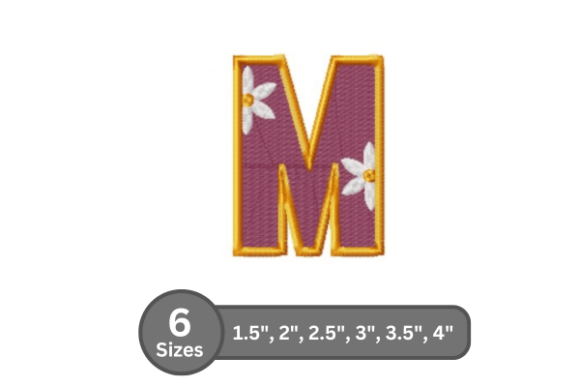
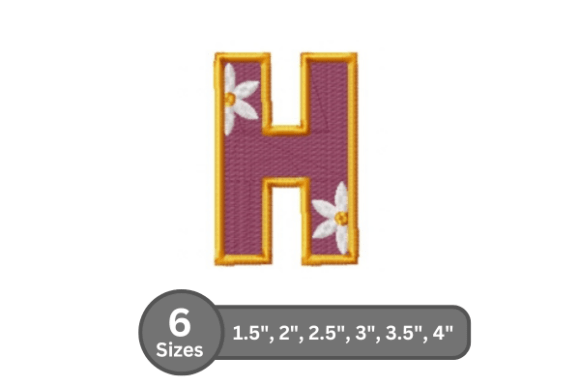
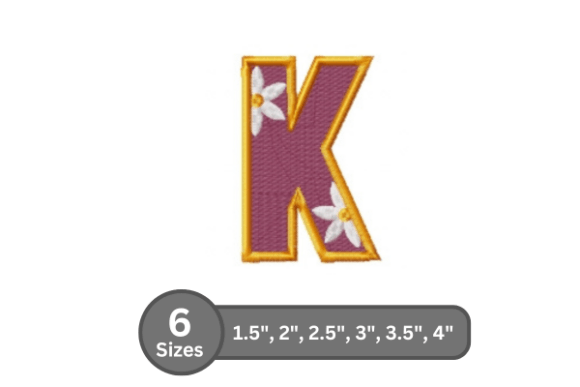
One of the most significant advantages of this design is its availability in multiple sizes. Scalability is a frequent pain point in machine embroidery; many designs look acceptable at one dimension but fail when resized due to stitch density issues or distorted proportions. The Daisy Joy Alphabet- Z is engineered to maintain its visual weight and clarity across a range of dimensions.
- Small Scale: At smaller sizes (e.g., 0.5 to 1 inch), the design retains enough detail to be legible on items like shirt cuffs, tote bags, or napkins without becoming muddy or overly dense.
- Medium Scale: For standard monograms on towels, pillowcases, or denim jackets, the medium size options provide the ideal balance of detail and speed.
- Large Scale: When applied to blankets, banners, or large wall art, the larger versions expand smoothly without introducing gaps or uneven spacing.
This versatility allows creators to use the same asset across diverse product lines. A boutique owner might use the small version for branding on clothing tags and the large version for a promotional banner, ensuring brand consistency without needing to purchase separate files. The ability to scale effectively also means that the design adapts well to different hoop sizes, reducing the need for re-hooping or complex multi-part stitching setups.
File Compatibility and Workflow Integration
In a professional setting, workflow friction can significantly impact productivity. The Daisy Joy Alphabet- Z mitigates this by including multiple embroidery file formats. Whether you operate a Brother, Janome, Bernina, Pfaff, Husqvarna Viking, or another major brand, having native support eliminates the need for third-party conversion software, which can sometimes introduce errors or alter stitch data.
Having access to various formats such as .PES, .DST, .JEF, and .EXP ensures that the design is ready to import directly into your machine's interface or your preferred editing software. This immediate usability is essential for freelancers who may work with client-owned machines or for studios that utilize a fleet of different equipment. It removes a layer of technical troubleshooting, allowing the creator to focus on design placement and material selection rather than file conversion issues.
Additionally, the clean structure of the file makes it easier to manipulate within embroidery editing suites. If a user needs to adjust the letter height, change the thread colors, or combine it with other elements to form a word, the underlying data remains organized. This flexibility supports creative experimentation without compromising the integrity of the original digitization.
Real-World Performance and Material Considerations
Theoretical quality must always be tested against practical application. In real-world scenarios, the Daisy Joy Alphabet- Z performs reliably across a spectrum of substrates. On stable woven fabrics like cotton twill or linen, the design produces crisp, defined edges with minimal puckering. The satin columns lay flat, reflecting light evenly for a polished finish.
When working with more challenging materials, such as fleece, velvet, or leather, the design's robust underlay becomes a critical asset. These fabrics can shift under needle pressure, leading to distorted letters. The careful digitization of the "Z" helps anchor the stitches, preventing the characteristic "wavy" effect often seen in poorly constructed text designs. However, users should still adhere to best practices regarding stabilizer selection. Even the best digitized file will struggle on unstable fabric without appropriate backing.
For those using metallic threads or specialty variegated yarns, the smooth curve transitions of the Daisy Joy Alphabet- Z are particularly beneficial. Metallic threads are prone to breaking on sharp turns; the rounded corners and gradual angle changes in this design reduce stress on the thread, resulting in fewer breaks and a more continuous sheen.
Ideal Use Cases and Target Audience
Who benefits most from incorporating the Daisy Joy Alphabet- Z into their collection? The design is particularly valuable for:
- Monogram Specialists: Professionals who create custom initials for weddings, corporate gifts, or luxury goods require a font that looks cohesive when combined with other letters. The stylistic consistency of this "Z" ensures it pairs well with the rest of the Daisy Joy alphabet set.
- Apparel Brand Owners: Small businesses producing limited-edition runs of t-shirts, hoodies, or hats need reliable, scalable assets that can be produced quickly and consistently.
- Home Décor Creators: Makers of personalized pillows, towels, and quilts benefit from the design's ability to handle larger scales without losing definition.
- Educators and Workshops: Instructors teaching embroidery classes can use this design to demonstrate proper hooping, stabilizer use, and satin stitch techniques, as the results are predictable and high-quality.
It is less suitable for beginners who lack experience with satin stitch maintenance or those working exclusively with very low-thread-count fabrics that cannot support dense stitching. Additionally, while the design is versatile, it is intended for machine embroidery only; it is not a vector file for screen printing or laser cutting.
Final Assessment and Recommendations
The Daisy Joy Alphabet- Z represents a solid investment for anyone looking to expand their digital embroidery library with a character that combines style and technical precision. Its strength lies in the attention to detail during the digitization process, specifically regarding stitch flow, underlay stability, and scalability. By offering multiple file formats, it respects the diverse hardware landscape of the embroidery industry, ensuring broad compatibility.
While no single design can solve every problem, this asset minimizes common pitfalls associated with angular lettering. It provides a dependable foundation for personalization projects, allowing creators to execute their vision with confidence. For professionals seeking to streamline their workflow and deliver consistent, high-quality results, the Daisy Joy Alphabet- Z is a practical addition that delivers long-term value through its reliability and adaptability. When paired with appropriate stabilizers and thread choices, it stands as a testament to how thoughtful digitization can elevate even the simplest of characters into a statement piece.