Pens: A Versatile Embroidery Design for Fabric Updates
In the realm of textile customization, the choice of design often dictates the success of a project. Among the myriad options available to crafters and hobbyists, the Pens embroidery design has emerged as a notable candidate for those seeking to revitalize existing fabrics. This digital pattern is specifically crafted to add a layer of visual interest to everyday items, ranging from casual wear to household linens. For individuals researching machine embroidery resources, understanding the utility, limitations, and specific applications of the Pens design is essential before committing to a purchase or download.
Understanding the Pens Embroidery Design
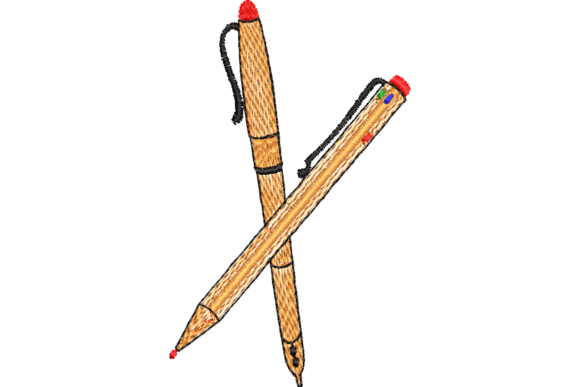
The Pens design is a machine embroidery file intended for use with computerized stitching machines. Unlike hand-stitched patterns that require manual interpretation, this digital asset provides precise instructions for the needle's path, ensuring consistency across multiple projects. The motif itself typically features stylized representations of writing instruments, rendered in a manner that balances detail with stitch efficiency. It is designed to be versatile, capable of being scaled to fit various hoop sizes while maintaining structural integrity in the final stitch-out.
What distinguishes this design in the market is its compatibility. The product is distributed with multiple file formats, such as .PES, .DST, .JEF, and others. This multi-format approach ensures that users with different brands of embroidery machines—from Brother and Bernina to Janome and Singer—can utilize the same design without needing complex conversion software. For the researcher evaluating digital assets, this technical flexibility is a primary factor in determining value and usability.
Reasons to Consider the Pens Motif
Several practical reasons might lead a crafter to select the Pens design over other options. First, it serves as an excellent solution for upcycling. Many individuals possess plain t-shirts, towels, or tote bags that lack character but are still in good condition. Applying this vibrant design transforms these utilitarian items into personalized gifts or unique wardrobe pieces. The imaginative flair of the pattern allows for creative expression without the need for advanced artistic skills, as the machine handles the execution.
Secondly, the design caters to specific thematic needs. For educators, students, or office workers, a motif centered on writing tools offers a relevant and relatable aesthetic. It can be used to create themed merchandise for back-to-school events, teacher appreciation gifts, or corporate swag. The ability to place the design on home decor items, such as pillowcases or table runners, extends its utility beyond apparel, making it a flexible addition to a decorator's toolkit.
Benefits and Tradeoffs
Evaluating the Pens design requires a balanced look at its advantages and potential drawbacks. The primary benefit lies in its ease of use. Because it is a pre-programmed machine file, the learning curve is minimal compared to creating a custom design from scratch. Users simply load the file, secure their fabric in the hoop, and initiate the stitching process. The inclusion of multiple file formats further reduces friction, eliminating the time spent troubleshooting compatibility issues.
However, there are tradeoffs to consider. As with any machine embroidery, the quality of the final result depends heavily on the materials chosen. Dense areas of the design may require stabilizers to prevent puckering, especially on stretchy fabrics like jersey knit t-shirts. Additionally, while the design is scalable, reducing it too much can compromise the visibility of details, while enlarging it excessively may require additional hoops or cause thread tension issues. Users must also account for thread consumption; intricate designs often use more thread than simple text or geometric shapes, which can impact project costs if high-quality threads are used.
Situations Where the Design Excels
The Pens design is a strong fit for specific scenarios where speed, consistency, and theme alignment are priorities. It is particularly effective for small-batch production. If a user intends to create a set of matching towels or a dozen identical t-shirts for a group event, the repeatability of a machine file ensures that every item looks uniform. This consistency is difficult to achieve with freehand methods.
It is also well-suited for intermediate crafters who want to expand their portfolio without investing in expensive design software. By utilizing a ready-made file, these users can focus on perfecting their hooping techniques, thread selection, and finishing processes. Furthermore, the design works exceptionally well on medium-weight fabrics. Items like canvas tote bags, denim jackets, and cotton towels provide a stable base that supports the density of the stitches, resulting in a crisp and durable finish.
When Alternatives May Be Preferable
Despite its versatility, the Pens design is not a universal solution. In situations requiring highly customized text or specific color palettes that differ significantly from the standard design layout, alternative approaches may be necessary. If a project demands a seamless integration of the design with other custom elements, purchasing a single motif might not be sufficient. In such cases, using vector-based design software to modify the file or commissioning a custom design could yield better results.
Additionally, for very delicate or sheer fabrics, the density of the Pens design might be too heavy, leading to distortion or damage to the material. In these instances, a simpler, less dense pattern or a technique like appliqué might be more appropriate. Similarly, if the goal is a large-scale wall hanging or a blanket, a single instance of this design might appear too small, necessitating a search for larger, more expansive motifs or the creation of a repeating tile pattern.
Practical Decision-Making Insights
To determine if the Pens embroidery design aligns with your goals, a few practical steps should be taken before downloading or purchasing. First, review the stitch count provided by the seller. A higher stitch count generally indicates more detail but also longer run times and higher thread usage. Compare this against your machine's capabilities and your available time.
Second, test the design on a scrap piece of the intended fabric. This "test stitch" is crucial for identifying potential issues with stabilizer requirements, thread tension, or hoop size. It allows you to see how the colors interact with the fabric and whether the scale is appropriate for the final application. Finally, consider the long-term utility. Will this design be used once, or will it become a staple in your repertoire? If it fits a recurring theme in your work, the investment in the multi-format file is likely justified.
Conclusion
The Pens embroidery design offers a practical and stylish method for updating fabrics with minimal effort. Its compatibility with various machines and its suitability for a range of materials make it a valuable asset for both hobbyists and small-scale producers. However, like any tool, its effectiveness depends on the context of the project. By weighing the benefits of consistency and ease against the constraints of fabric type and design specificity, users can make informed decisions about whether this design meets their specific needs. For those looking to add a touch of imagination to t-shirts, towels, or home decor, it presents a viable and efficient option within the broader landscape of machine embroidery.